An Investigative Deep Dive Into the Growing Risks to Tesla and Its Shareholders
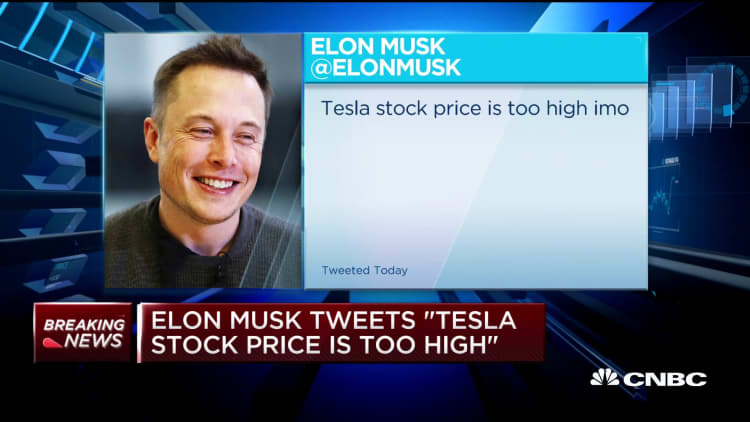
In recent months, a series of increasingly sharp signals from Elon Musk and Tesla’s own market performance have set off alarm bells across Wall Street. Once the poster child of electric-vehicle (EV) growth, Tesla’s stock faces mounting headwinds — and many believe the warnings now being issued are more serious than typical volatility.
This article unpacks the multiple layers behind Tesla’s potential risks: political distractions, weakening demand, investor concern, and leadership dynamics that are increasingly testing the faith of even generous bulls.
Tesla’s Slumping Sales and Market Troubles
A starting place for understanding the looming risk is Tesla’s reported first-quarter 2025 sales slump. According to media coverage, Tesla delivered around 336,681 vehicles in Q1, down from 387,000 a year earlier — a drop of about 13%.
That decline marks one of Tesla’s worst quarters in recent memory and raises fundamental questions about demand. Analysts are warning that an aging product lineup, increased competition (especially from China’s BYD), and weakening demand could be combining to pressure Tesla’s core business.
The consequence: investor sentiment is cooling. With fewer deliveries, Tesla’s revenue growth may slow, and with margins already under pressure, profitability could be squeezed.
A Political Side Hustle That Spooks Investors
One of the most significant risk factors isn’t purely business-related — it’s political. Elon Musk’s increasing engagement in right-wing U.S. politics is raising serious alarm among investors, who fear that his dual role could distract from Tesla’s operational needs.
In a striking development, Musk announced plans to form a new political party, named the “America Party” (Đảng Nước Mỹ), publicly opposing certain tax and spending policies.The market reacted quickly: Tesla shares fell sharply — reports say by about 8% in one session.
Political involvement is not inherently bad for a business leader. But for someone whose identity is so intertwined with his company, it introduces corporate risk: investors worry, not just about what Musk is building — but what he’s doing outside Tesla.
Massive Wealth Erosion — And What It Means for Tesla
The fallout from Tesla’s stock troubles has not just hurt the company — it’s hurting Elon Musk’s personal fortune. Multiple reports suggest he lost tens of billions of dollars in net worth as Tesla’s share price plunged.
One particularly dramatic day saw Tesla’s stock drop 14%, equating to a $34 billion loss for Musk in a single session. Over time, this broader decline in Tesla’s market capitalization is eroding one of Musk’s most important assets — his ownership stake in Tesla.
For shareholders, that’s deeply meaningful. Musk’s financial alignment with Tesla has long been a pillar of investor confidence: if he’s bleeding value, so are many who backed the vision.
Analyst Alarms: “Code Red” Moments for Tesla
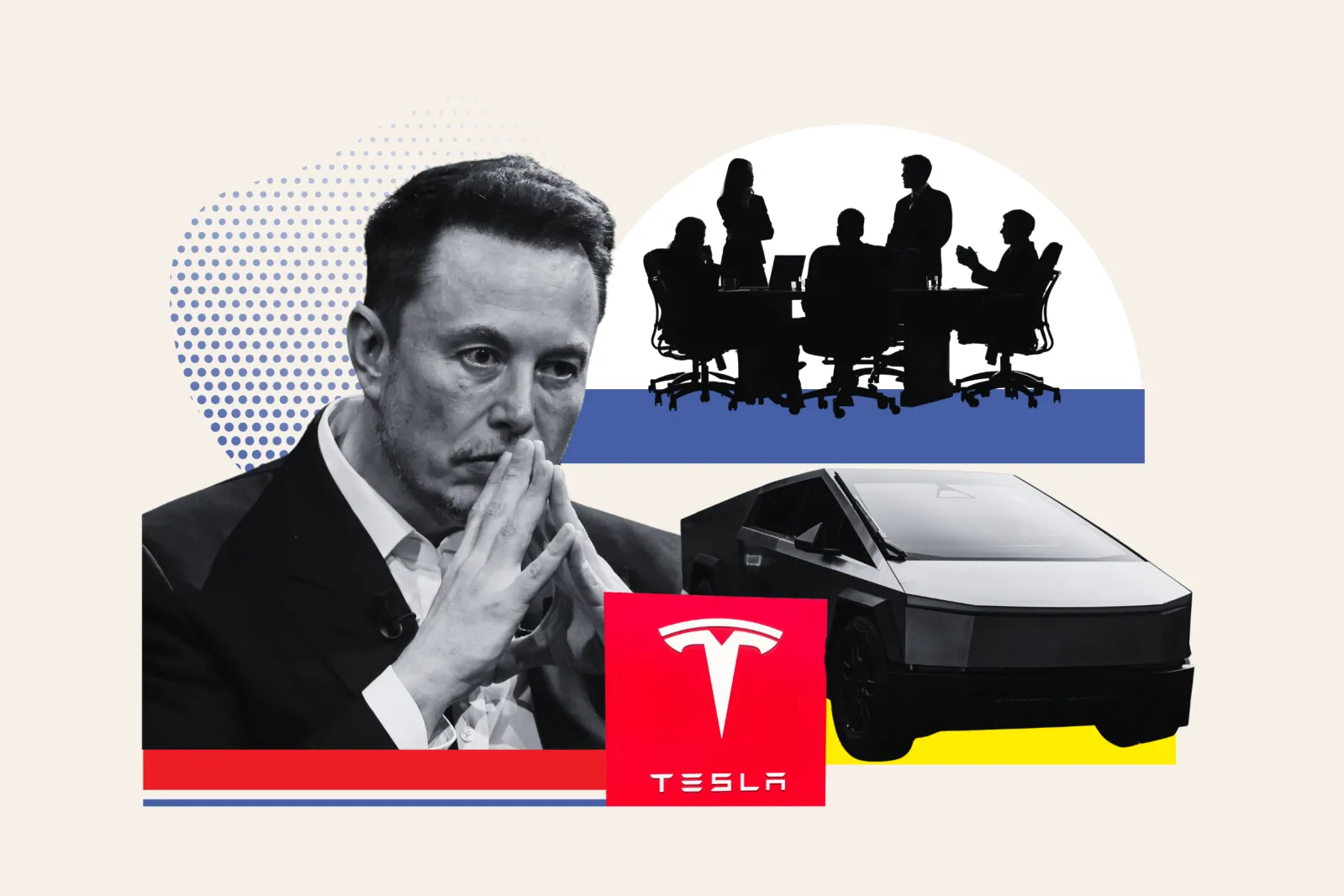
Some of the most pointed warnings are coming from financial analysts. One notable voice is Dan Ives from Wedbush Securities, who reportedly described Tesla’s situation as a “code-red” moment. According to Ives and others, several key risks are converging:
Brand reputation is being damaged by Musk’s political activity
Demand is softening, even as Tesla cuts prices aggressively
Profit margins could compress further
The board may not be providing adequate governance or oversight
In response, Ives has called for Tesla’s board to set clearer “guardrails” on Musk’s time, particularly given his heavy involvement outside the company.
Musk’s Pushback — And What It Reveals
Elon Musk has not stayed silent. In fact, his reactions to criticism have grown sharper.
When Dan Ives publicly recommended greater board oversight of Musk due to his political distractions, Musk didn’t mince words: on his social-media platform (X), he bluntly told Ives toshut up.”
This response underscores a broader tension: Musk’s vision for Tesla may be non-negotiable in his mind, even if it introduces risk. And it also highlights concerns about governance — can a company so identifiably linked to its founder remain resilient when that founder is simultaneously focused on external political ambitions?
Corporate Pay Package Controversy
Adding to the turbulence is Musk’s proposed $1 trillion compensation package, which has been widely criticized. The size of the package has raised eyebrows across the investment community, prompting major institutional investors to voice concern.
Norway’s sovereign wealth fund, one of Tesla’s large shareholders, announced it would vote against the package. Some shareholders argue the pay plan gives Musk astonishing future voting power, which could fortify his control but also potentially weaken checks on his authority.
Musk, meanwhile, has defended the package aggressively — embracing highly charged rhetoric and even calling his critics “corporate terrorists.”
To many, this compensation fight isn’t just about pay: it’s about who controls Tesla’s future.
A Reputation Risk That Could Erode Tesla’s Brand
Beyond the numbers, Tesla is facing a reputational challenge. According to analysts, Musk’s political activism is turning off a portion of Tesla’s customer base, especially in a polarized world.
Some consumers may be increasingly reluctant to buy a car from a company led by a CEO deeply involved in controversial political endeavors. That risk could translate into slower sales in key markets, especially if consumer sentiment continues to sour.
Competitive Threats: Tesla’s Ageing Lineup vs. Aggressive Rivals
Tesla’s early mover advantage in EVs is no longer as secure as it once was. Rivals are coming on strong — both in technology and volume — particularly in China, where companies like BYD are expanding rapidly.
At the same time, Tesla’s own product refresh cycles may be lagging. An aging lineup, combined with deep discounts, is putting pressure on margins and raising questions about Tesla’s next innovation leap.
The Risk Multiply When Leadership Is Divided
What makes the current warnings so serious is that these aren’t isolated risks: they’re interconnected.
If Musk’s political distractions weaken Tesla’s core business, then sales drop.
If sales drop, profitability suffers, and that hurts both Tesla and Musk’s stake.
If Tesla’s leadership is too intertwined with Musk personally — and he has oversized control — there may be limited internal checks to protect long-term shareholder value.Governance concerns, combined with a massive pay package, could further erode investor trust.
Put simply: Tesla’s risk isn’t just external. A lot of it comes from within.
What Should Investors Watch Closely
Given the scale and complexity of the risk, here are key things for investors — both existing and prospective — to monitor carefully:
Tesla’s upcoming earnings reports — will they show a recovery in deliveries, margins, or cost control?
Musk’s political moves — does he step back, or escalate his involvement?
Shareholder votes on his pay package — how many back it, and what does that say about investor confidence?
New product launches — especially any next-gen EVs, autonomy features, or cost-competitive models
Board changes or governance shifts — will Tesla’s board start pushing back?
Global EV competition trends — can Tesla defend its lead in core markets?
Conclusion: The Warning Isn’t Just About Stock — It’s About the Soul of Tesla
Elon Musk has long been a charismatic, risk-taking visionary, but the risks he now highlights around Tesla aren’t just business risks — they’re existential.
The warnings he’s dropped lately — whether implicitly through political moves, or explicitly via his defensive public tone — suggest that Tesla may be entering a more volatile era. Investors are no longer just betting on innovation; they’re betting on Musk’s ability to balance his many ambitions, and on the company’s capacity to navigate competition, governance, and shifting demand.