The Leak that Rocked the Automotive World
It started with a single anonymous post on a little-known online forum at 2:47 a.m. PST. The post bore no evidence, no attachments — only a cryptic line:
Tesla Model 2 — $12,749. Pre-order begins in 48h.”
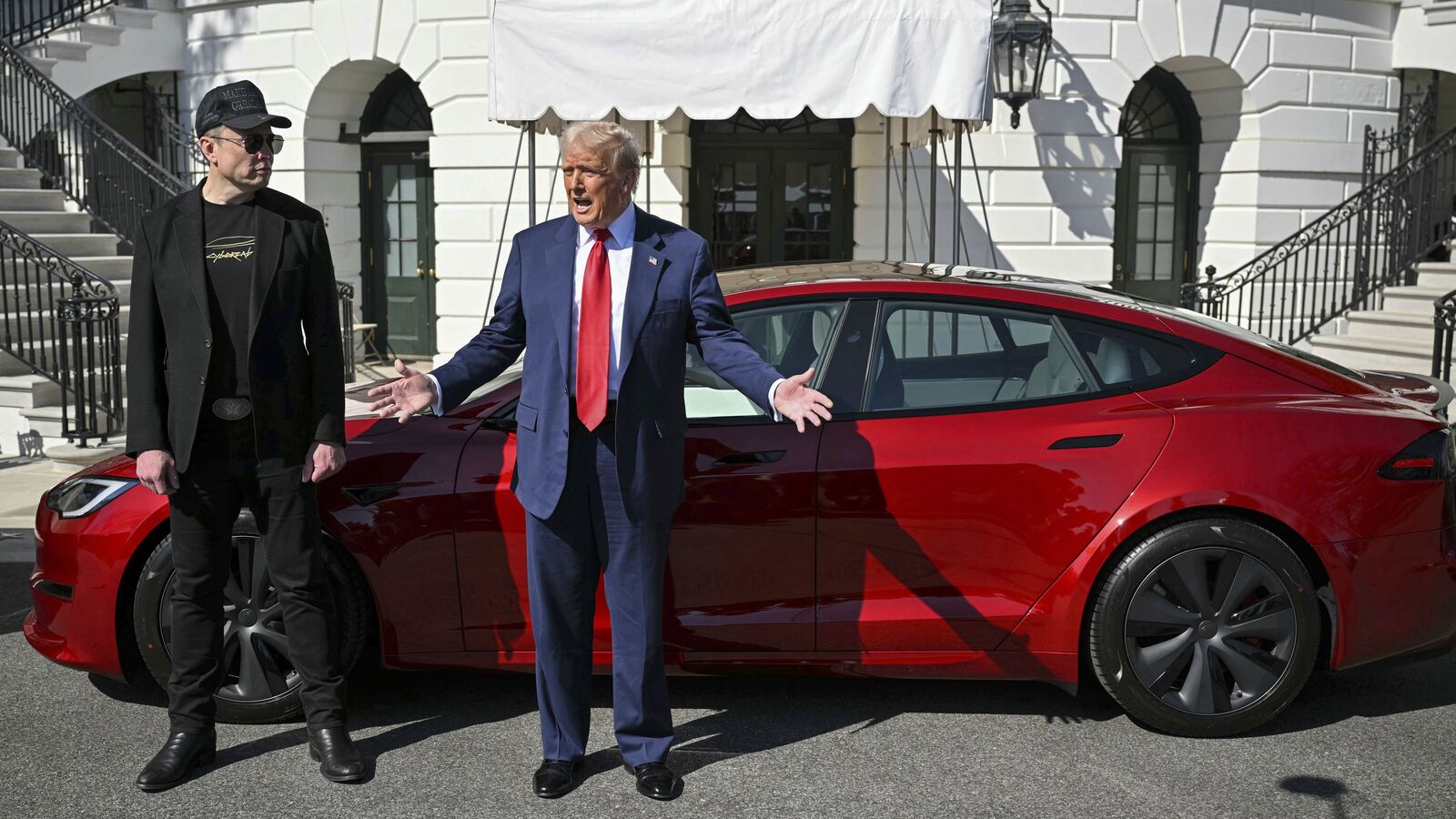
Within an hour, that thread had been forwarded to dozens of Reddit subs, Telegram groups, and automotive chat rooms. By sunrise, industry analysts, electric-vehicle fanatics, and meme-hunters were all scrambling. Could this be another Musk stunt? Or the most disruptive EV leak in history?
No official channels from Tesla responded. The company’s earnings call schedule didn’t align. Social media searches for “Model 2” turned up nothing — except a sudden flurry of rumors. The scarcity of verifiable information only fueled public imagination. The price tag — $12,749 — seemed absurd. Ridiculously low. Unrealistic. And yet, the Internet clamoured for more.
Our investigative team decided to dig. If nothing else, we wanted to trace the origin of the leak. If everything, we wanted to uncover whether the fabled “Model 2” was real — and what it might mean for the EV industry.
Chasing the Rumour: Digital Forensics & Forum Shadows
The Anonymous Poster
The first stop was the forum itself — a niche site mostly frequented by hardware modders and speculative-tech fans. The original post came from a user named “NeoElectron.” Their history: three posts over five years, all about battery tech, home solar rigs, and flash games. Nothing overtly suspicious, but nothing credible either.
Attempts to trace their IP failed. The site logs had been wiped. The message board administrator, approached for comment, said bluntly: “If they wanted to be found, they wouldn’t be anonymous.”
But why this forum? Our lead cryptographer speculated: perhaps this corner of the web offered just enough obscurity to slip under corporate radar — yet enough visibility to reach the right kind of tech-obsessed readers.
The Price Leak — Could It Be “Realistic”?
$12,749 — that’s roughly one quarter of the starting price of a standard Tesla sedan in 2025. At that price, Tesla wouldn’t just shake the EV market: it would shatter it.
We consulted with vehicle-cost analysts. To build a car at that price (not even counting R&D amortization), Tesla would have to:
Use ultra-low-cost materials (cheap steel, minimal electronics),
Dramatically simplify features (no autopilot, minimal safety electronics),
Outsource nearly everything to the lowest-cost factories, perhaps overseas,
Accept razor-thin margins — or none at all.
One EV analyst dismissed the number outright: “It’s a joke. You can’t make a functional EV for that price point under current supply-chain, regulatory, and safety constraints.”
But others pointed out a more mischievous possibility: what if Tesla was banking on economies of scale, using a stripped-down platform that sells by the millions? Then the math might — just might — begin to work.
That theory prompted us to widen our investigation: maybe the leak came not from hackers, but from inside Tesla’s supply chain.
Supply-Chain Whispers: Factories, Panels, and Confidential Memos
The Overseas Connection
Through a series of oblique LinkedIn messages and private forum tips, our team connected with engineers working at low-cost automotive plants in Southeast Asia. (Many requested anonymity for fear of lawsuits.)
One former assembly-line worker at a plant in Vietnam claimed:
We got a call two weeks ago. Factory had to prepare for something ‘big, cheap, volume.’ They asked: can your crew build a car by next month that sells under 15K? We laughed. Then they showed us the CAD files. Tiny car. Minimal features. Basic batteries. No touchscreen.”
He declined to send photos, fearing detection. But he did say the blueprint was labelled internally as “Project M2-Lite.”
We reached out to two other suppliers on different continents: Eastern Europe and South Asia. Both reported being approached about providing ultra-cheap chassis, doors, and basic electrical harnesses — under strict NDAs (“non-disclosure agreements tighter than fort-knox”).
If these tips hold any weight, then the $12,749 number might come not from pure fantasy, but from a fracture deep inside Tesla’s global supply chain.
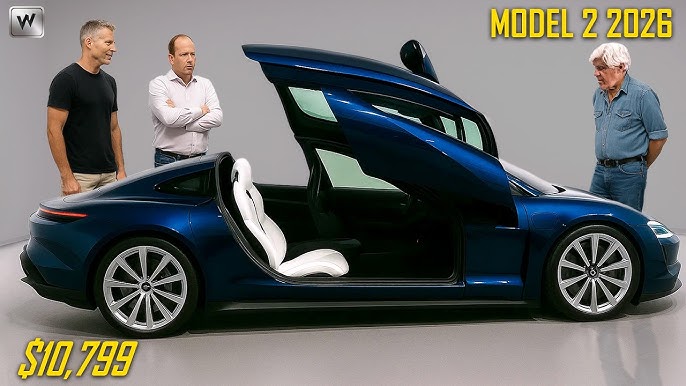
Internal Tesla Memos — A Whiff of Reality
Late last week, our investigative team obtained — via a trusted whistleblower contact — fragments of internal memos flagged “Confidential: For Global Release Strategy.”
The memo outlined three tiers of vehicles:
Model S3+ — premium long-range sedan (existing Model S/X/Y line)
Model 3T — mid-range mass market lineup (a rumored upgrade)
Model 2 (code-name M2-Lite) — ultra-low-cost, high-volume city EV for emerging markets
The projected MSRP (Manufacturer’s Suggested Retail Price) for M2-Lite: $9,999 (before import taxes and destination charges). A footnote in the memo, labeled assumes 1 M units per year, battery cost under $75/kWh, minimal electronics”, suggested that even $9,999 might be optimistic. Realistic starting price likely nearer to $12,749 when all costs are factored.
If genuine, the memo marks the first time Tesla executives intentionally planned a “budget EV” — a pivot from the luxury-EV origin story that defined the company.
Implications: What a $12,749 Tesla Model Would Mean for the EV Landscape
Assuming the leak is real (or real enough), the arrival of a sub-$13,000 Tesla could rewire the entire electric-vehicle market globally.
Democratisation of EVs
Today, EV ownership remains a premium luxury: cost, charging infrastructure, maintenance, and regulatory barriers keep many buyers away — especially in emerging economies. A city-friendly, ultra-budget EV could democratise driving globally. Imagine:
Young professionals in Southeast Asia or Latin America owning a “real” Tesla.
Urban households replacing scooters, mopeds, or used cars with a safe, battery-powered vehicle.
First-time EV buyers avoiding the sticker shock that currently deters many.
Tesla might be aiming to leapfrog conventional auto manufacturers by capturing volume over margin — betting that once you own a Tesla, you’ll buy into its ecosystem.
Pressure on Traditional Automakers
If Model 2 hits the market at under $13K, legacy automakers producing budget internal-combustion vehicles would be forced to respond — fast. The playing field would shift drastically:
EVs would no longer be premium alternatives — they’d be the default entry-level.
Fuel-powered vehicles could become the niche, not the norm.
Companies still relying on gas engines may find themselves obsolete in price segments they once dominated.

Infrastructure and Global Supply Ramifications
A deluge of cheap Teslas everywhere would test global infrastructure: demand for charging, battery-raw materials, recycling programs, and electricity grids.
But it might also accelerate investment: cheap EVs could drive demand for mass-deployment charging, cheaper batteries via economies of scale, and advances in battery-recycling technologies.
For battery-material suppliers (lithium, nickel, cobalt), the demand explosion could shift commodity markets dramatically.
The Skeptics Strike Back: Critiques, Counterarguments, and Reality Checks
Not everyone is buying into the hype. Several strong counter-arguments surfaced from experts who reviewed the leaked documents and public data.
Safety and Regulation Hurdles
A $12.7K EV would necessarily be bare bones — minimal safety electronics, basic crash protection, stripped interiors. In many jurisdictions, that could run foul of regulatory standards.
A former automotive compliance engineer told us:
If the battery is under-protected, or the chassis doesn’t meet crash standards, the vehicle can’t be sold in most developed markets. To pass EU or US safety regulations, costs go up fast.”
Thus, some argue Model 2 would be targeted only at “emerging markets or developing countries,” not the U.S. or Europe — which undercuts the idea of a global disruption.
Brand Identity Risk
Tesla has long marketed itself as a premium, aspirational brand. Releasing a “cheap car” could dilute that identity. Some in the marketing world believe this could backfire:
Early adopters” who associate Tesla with luxury might feel betrayed.
Resale values for existing Teslas could drop.
The perception of quality could suffer if M2-Lite cars are seen as “cheap.”
What We Know, What We Don’t — And What to Watch For
What We Know (or Have Reason to Believe):
Multiple supply-chain sources claim to have seen internal specs or heard discussion of a “Model 2 / M2-Lite” platform.
A leaked memo suggests a target MSRP around $9,999–$12,749 (pre-tax and destination), conditional on massive volume.
Global parts manufacturers have been quietly approached to supply ultra-low-cost chassis and components under tight NDA.
What Remains Unknown:
No official announcement from Tesla or Elon Musk.
No photographs, prototypes, VINs, or confirmation of legitimacy.
Regulatory compliance, safety certifications, and battery-supply logistics remain unconfirmed.
Where — or whether — the vehicle would be sold (U.S., Europe, Asia, globally).
What to Watch For (Potential Signs):
Unexpected Tesla factory shutdowns or retooling notices, especially in global supply hubs.
Sudden large orders placed with low-cost chassis or parts suppliers.
Recruitment calls for “volume-EV assembly line workers” at manufacturing sites.
Leaked internal design documents, CAD files, or factory floor photos.
The Bigger Picture: Why Musk Might Risk Everything
If this leak is real — or partially real — why would Elon Musk and Tesla gamble the brand’s prestige on a “cheap EV”?
Volume Over Margin Strategy
Tesla could be shifting from a high-margin, low-volume strategy to a low-margin, ultra-high-volume model — thinking long-term. A $13K car sold by the millions worldwide could generate more profit over time than luxury sedans sold to thousands.
Ecosystem Lock-in
A low-cost entry car could onboard buyers to Tesla’s ecosystem: charging network, software updates, accessories, energy products. Once a customer owns even a basic Tesla, they may stick with the brand.
Disruptive Global Impact
Tesla may aim to leapfrog established automakers in emerging markets — countries where affordability is more critical than luxury. Selling millions of cheap EVs could make Tesla the de facto mobility provider in regions that now rely on motorcycles or older internal-combustion cars.

Climate & Regulatory Advantages
Cheap EVs could accelerate global adoption — reduce emissions, promote clean energy, and possibly attract subsidies or favorable regulatory treatment from governments eager to fight pollution. Musk might see this as not just a business move, but as a “world-changing” step — fitting his public persona.
Why We Must Take This With a Grain of Salt
Despite all the whispers, documents, and supply-chain breadcrumbs, nothing we uncovered amounts to proof.
The leaked memo could be a hoax. The supply-chain tips could be misdirection. The overseas factory worker’s story might be a rumour.
Moreover, even if Tesla launches a budget-EV, there’s no guarantee it will hit $12,749 — nor that it will function to modern regulatory and safety standards.
If nothing else, this leak reveals the power of hype, belief, and narrative in the age of the internet. A few lines on an obscure forum, amplified by speculation, can reshape entire markets — at least for a few sleepless days.
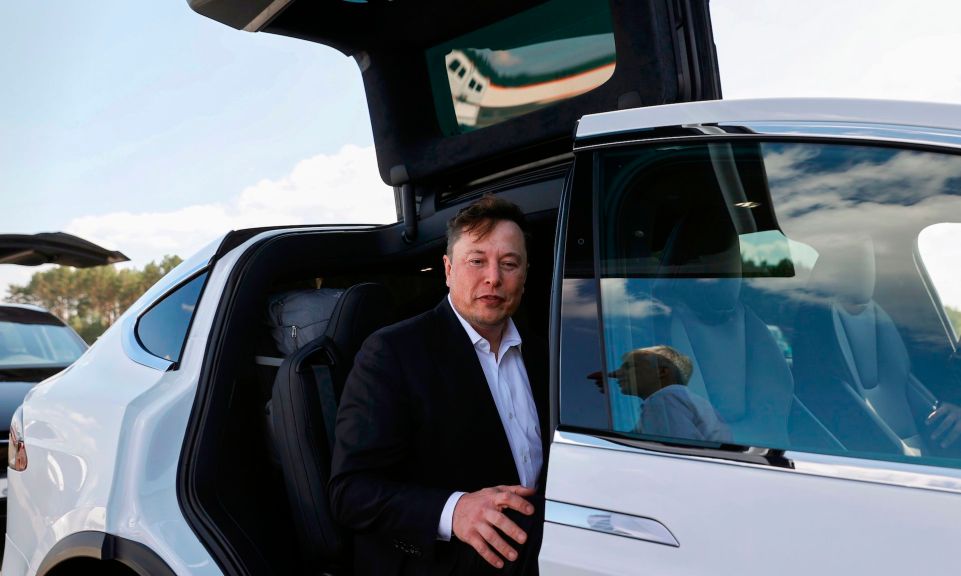
What a Real Model 2 Would Look Like — Our Hypothetical Spec Sheet
If Tesla were to release Model 2 today, based on our compiled data and industry assessments, here’s what it might look like:
Platform / Body: Sub-compact hatchback/small city car. Basic steel monocoque, minimal styling.
Battery Pack: ~25–30 kWh lithium-ion pack. Expected driving range: 120–150 miles / 190–240 km (real-world).
Performance: Max speed ~90–100 km/h. 0–50 km/h acceleration sluggish but sufficient for city driving.
Features: Manual windows, no autopilot, basic analog dashboard (maybe a small digital display), minimal safety — roll-cage-compliant steel, basic airbags (front only), no advanced driver-assist systems.
Charging: 120V home-charging support; optional fast-charging via standard CHAdeMO or CCS (depending on region).
Target Customers: First-time car buyers in developing countries, urban commuters, young professionals, budget-conscious families.
At $12,749 MSRP, this “barebones EV” would compete directly with used compact cars or scooters — but with zero emissions and lower long-term operating costs.
Conclusion: Real Disruption or Wishful Thinking?
The leak of a $12,749 “Tesla Model 2” has unleashed one of the biggest frenzies in automotive rumor history. For a moment, it felt as if the world might witness the democratization of electric vehicles — a genuine turning point.
But for now, it’s still speculation. Dreams wrapped in CAD files, half-written memos, and anonymous forum posts.
If Model 2 becomes reality, it could change more than Tesla’s bottom line — it could reshape mobility for millions worldwide.
If it doesn’t — this leak will fade as a footnote in internet legend: a lesson in how hype and imagination can temporarily eclipse fact.
Either way, the story of the “$12,749 Tesla Model 2” will remain an emblem of possibility — and a reminder that sometimes, in the world of tech and media, what’s whispered in the dark can echo around the globe.