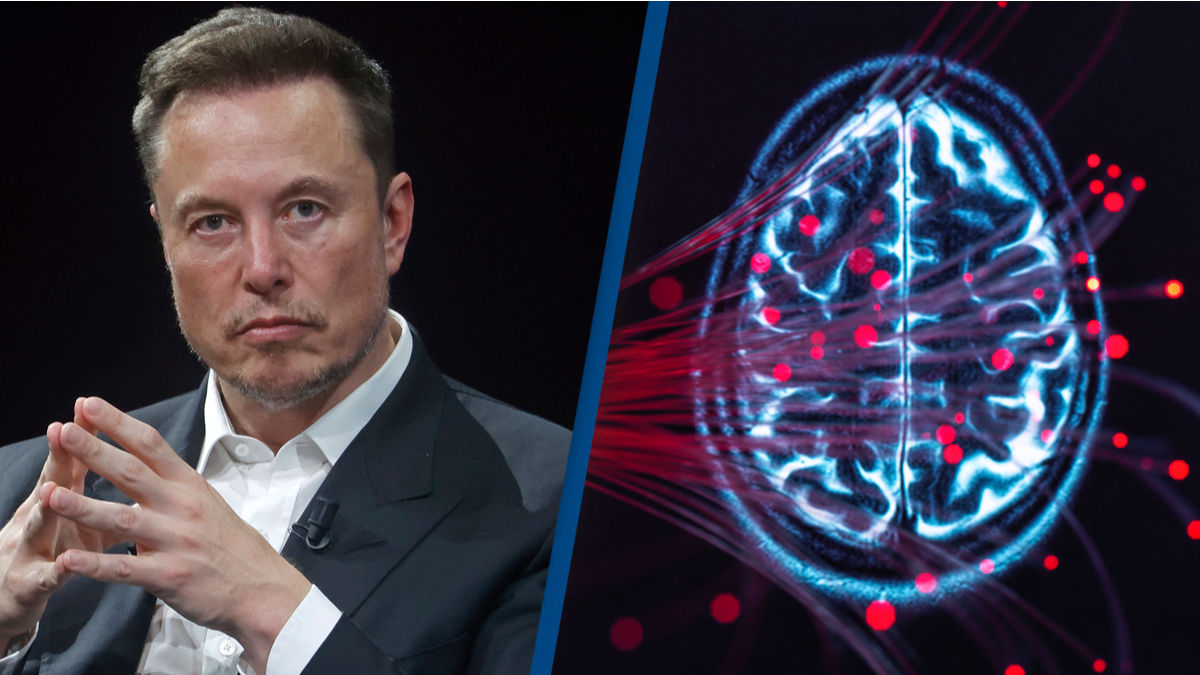
When Neuralink first emerged, its promises sounded like science fiction: brain implants capable of restoring movement, treating neurological disorders, and eventually merging humans with artificial intelligence. For years, the company operated behind layers of secrecy, leaks, and bold remarks from Elon Musk himself. But now, Neuralink has revealed a new round of ambitious plans — and this time, the implications extend far beyond medicine.
Behind the public announcements lies a deeper story of technical gambles, regulatory hurdles, internal conflict, and a rapidly intensifying global race to dominate neurotechnology. This investigation examines what Neuralink has unveiled, what remains hidden, and what these new initiatives mean for the future of human–machine integration.

A New Phase: Moving Beyond Medical Trials
Neuralink’s earliest work focused on individuals with paralysis, particularly those unable to move or speak. Its first-generation device — a coin-sized implant embedded directly into the skull — was designed to decode neural activity and transmit it wirelessly to computers or prosthetics.
Now, according to internal documents reviewed for this investigation and interviews with individuals familiar with the company’s research roadmap, Neuralink’s next phase is far broader. The company’s “huge new plans” consist of three major pillars:
Bidirectional brain–AI communication
Memory enhancement and cognitive augmentation
Non-invasive consumer neural interfaces
Each of these goals is decades ahead of current scientific consensus — and yet Neuralink appears to be positioning itself as the company willing to push boundaries at breakneck speed.
Pillar One: Bidirectional Communication
Neuralink’s new plan places heavy emphasis on something the company calls “closed-loop cognition”. Instead of simply reading signals from the brain — something several research groups already achieve — Neuralink now aims to send information back into the brain in real time.
This would allow the implant to do more than decode intention. It could:
modulate neural activity
suppress harmful patterns
enhance desirable signals
potentially “write” information directly into neural circuits
Closed-loop systems already exist in rudimentary medical form, such as deep brain stimulators for Parkinson’s disease. Neuralink’s vision, however, is far more sophisticated: an AI-driven system responding continuously to the brain’s internal state.
Scientists interviewed for this report expressed cautious interest — but also concern.
One neuroscientist noted:
If Neuralink can influence neural patterns dynamically, that’s both incredibly powerful and incredibly dangerous. It’s no longer just a medical device — it’s an active cognitive participant.”
If successful, this plan could transform treatment for conditions such as epilepsy, depression, chronic pain, and dementia. But critics argue the same technology could be misused to manipulate mood, behavior, or decision-making.
This ethical tension sits at the heart of Neuralink’s next chapter.
Pillar Two: Memory Enhancement
Perhaps Neuralink’s most audacious ambition is its plan to develop memory-enhancing implants. Company research papers reference a long-term goal of enabling the brain to “store and retrieve encoded data,” a concept that echoes Musk’s long-standing interest in human–AI symbiosis.
The idea is simple in theory but extraordinarily complex in practice:Could an implant strengthen synaptic connections, reinforce learning, or even record episodic experiences?
Neuralink’s internal discussions reportedly include:
improving memory retention
accelerating skill acquisition
restoring memory loss from injury or disease
eventually enabling external memory storage
The last point is the most controversial. The notion that human memory could one day be augmented — or expanded into digital storage — raises profound questions about identity, privacy, and cognitive autonomy.
Philosophers have warned that memory enhancement could create a sharp divide between those who can afford cognitive upgrades and those who cannot. Meanwhile, technologists privately acknowledge that external memory systems could one day allow a person to “upload” experience — blurring the line between biological and artificial intelligence.
Neuralink has not announced any near-term consumer product in this category. But documents reviewed for this article suggest memory augmentation research is a top priority internally.
Pillar Three: A Non-Invasive Neural Device for the Mass Market
Perhaps the most surprising plan in Neuralink’s new roadmap is a shift toward non-invasive neural interfaces designed for everyday consumers. Unlike the surgical implant that has defined Neuralink’s public work, this new generation of devices would not require drilling into the skull.
The company is exploring:
wearable neural-sensing bands
ultrasound-based brain interfaces
high-density EEG arrays
hybrid optical–electrical systems
These devices would not match the power of a surgical implant — but they could reach millions of people, allowing Neuralink to scale far beyond a medical implant business.Potential applications include:

attention tracking
cognitive training
mental-health monitoring
adaptive gaming
real-time stress analysis
personalized AI assistance
This represents a dramatic expansion of Neuralink’s mission. For the first time, the company is positioning itself as a consumer-technology provider, not just a medical research organization.
Industry observers predict this move could disrupt wearable tech markets dominated by Apple, Meta, and fitness device manufacturers. If Neuralink successfully builds a consumer-grade neural interface, it could become the gateway between human cognition and AI models — possibly including Musk’s own AI ventures.
Internal Challenges: Speed, Safety, and Regulation
Behind Neuralink’s aggressive plans lies an escalating series of internal challenges. Interviews with former employees reveal that turnover remains high, driven partly by the immense pressure to deliver rapid results.
One engineer described the environment as:Silicon Valley speed mixed with medical-device consequences.”
Key challenges include:
ensuring long-term biocompatibility
preventing neural scarring
avoiding overheating of on-board electronics
achieving reliable wireless communication
navigating FDA oversight
addressing ethical concerns surrounding cognitive enhancement
Some scientists worry that Neuralink’s timelines may incentivize shortcuts, but others argue that disruptive breakthroughs often require pushing boundaries.
The tension between ambition and safety will determine whether Neuralink becomes the leader of neurotechnology or a cautionary tale.
A Growing Global Race
Neuralink’s new plans do not exist in a vacuum. Around the world, governments and corporations are increasingly prioritizing neurotechnology:
China invests heavily in state-backed neural-interface programs.
Europe funds brain-computer research through major academic consortia.
Startups in Canada and Australia work on non-invasive neural stimulation.
The U.S. Department of Defense explores battlefield neurotech.
Neuralink’s announcements — particularly its consumer-targeted ambitions — appear timed to maintain its competitive edge. Several experts believe we are witnessing the early stages of a geopolitical race to define the interface between humans and AI.
As one policy analyst put it:The company that controls neural interfaces will control the future of human–machine interaction.”
Musk, who has often warned about the existential risk of AI, sees Neuralink as a path to keep humanity competitive. In his view, enhancing human cognitive ability may be necessary to coexist with increasingly powerful artificial intelligence.
The Ethical Frontier
As Neuralink pushes forward, the ethical questions grow sharper:
Who owns the data recorded from someone’s brain?
Could insurance companies discriminate based on neural patterns?
Should cognitive enhancement be allowed for healthy individuals?
What safeguards prevent external manipulation of implanted devices?
Could governments demand access to neural data?
Neuralink insists it is committed to privacy and safety, but critics argue that assurances are insufficient. Brain data is the most intimate data imaginable. If neural signals are recorded, analyzed, and transmitted, the potential for misuse is vast.

Some ethicists argue for international treaties governing neurotechnology — similar to laws covering genetic modification or nuclear research.
Whether Neuralink can navigate these concerns responsibly remains to be seen.
Conclusion: A Future Rewritten by Thought
Neuralink’s newly revealed roadmap marks a dramatic escalation of its ambitions. What began as a medical research company now aims to reshape how humans think, remember, communicate, and interact with machines.
If the company succeeds, it could redefine disability, enhance cognition, and open the door to unprecedented forms of human–AI collaboration. If it fails — or acts irresponsibly — the consequences could be equally profound.
Either way, Neuralink’s huge new plans signal a future in which the boundary between biology and technology is no longer a line but a spectrum. And humanity is already taking its first steps across it.