In a historic first for late-night television, Stephen Colbert has been named one of TIME Magazine’s “100 Most Influential People of 2025″—a landmark recognition that celebrates not just his comedic genius or ratings dominance, but his unwavering conviction, clarity, and fearless integrity in shaping public conversation for decades.

The announcement, revealed in TIME’s special issue Wednesday, brought a hush of admiration across the industry, honoring the master of political satire whose voice—sharp yet compassionate, bold yet deeply thoughtful—has inspired millions to think critically, speak honestly, and engage with the world in an era of noise and division.
TIME’s profile praises Colbert for proving “humor can challenge power” and “truth can cut through noise,” highlighting his evolution from The Daily Show correspondent to The Late Show host whose monologues became cultural touchstones.
“Stephen Colbert’s influence isn’t defined by trophies or headlines,” the citation reads.
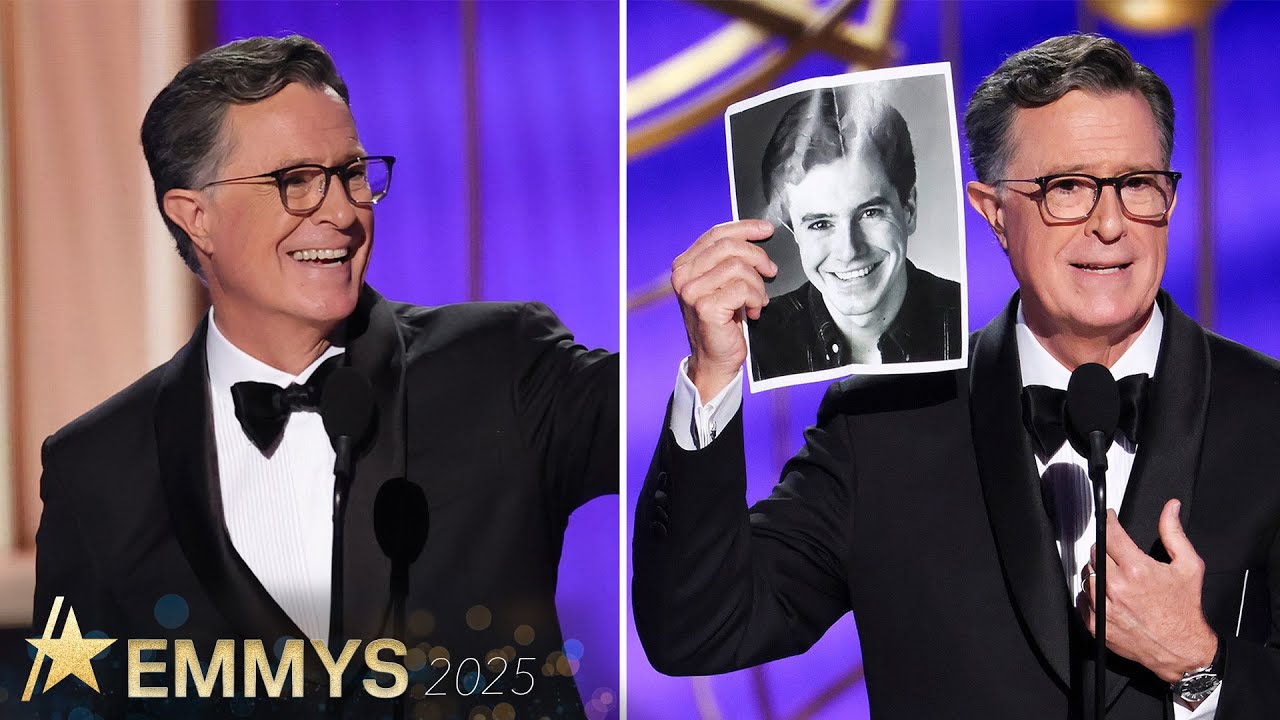
“It lives in the millions he’s inspired to stay engaged, question authority, and find humanity amid chaos.”
Colbert, 61, reacted with characteristic humility in a statement: “I’ve always tried to say what matters.”
The honor arrives amid reflection on his career’s end with The Late Show‘s cancellation earlier this year—a run that weathered elections, pandemics, and cultural upheavals with satire that comforted as much as it critiqued.
The recognition feels timely.
Colbert’s monologues dissected power with precision, blending wit and empathy to make complex issues accessible.
From viral takedowns to emotional tributes, he turned late-night into a forum for truth.
“His legacy comes from authenticity, not applause,” TIME noted, crediting him with redefining the genre in polarized times.
Fans erupted online: “Colbert on TIME 100—about damn time! He’s shaped how we see the world.”
Clips of iconic moments resurfaced, trending #ColbertTIME and #InfluentialStephen. Even critics paused: “Love or hate his politics, his impact is undeniable.”

At this stage, Colbert isn’t chasing headlines—he’s earned them through decades of saying what matters.
TIME’s honor affirms what audiences knew: His voice endures.
In 2025, history acknowledges a comedian who made us laugh—and think.
Stephen Colbert didn’t just entertain. He influenced.
And the world finally caught up.
HH. BREAKING: Late-Night Television Stopped Breathing for 30 Seconds — and Stephen Colbert Led the Silence
Late-night television is built on rhythm: cue the music, land the joke, keep it moving. Last night, that rhythm broke.
As news spread of a Hollywood legend’s death, Stephen Colbert stepped onto his stage and did something almost unheard of in modern television. He didn’t speak. He didn’t joke. He didn’t introduce a monologue.
He stood still.
No music.
No applause.
No setup.
For roughly thirty seconds, Colbert remained silent — eyes down, hands folded — as the camera held the shot. The audience didn’t clap because there was nothing to react to. The control room didn’t cut away because it wasn’t supposed to. The pause was intentional.
In an industry that fills every second, Colbert chose to leave one empty.
A Silence That Spoke Louder Than Words
Viewers immediately sensed that this wasn’t a mistake or technical glitch. The stillness had shape. Purpose. It felt deliberate in a way that made people uncomfortable — and attentive.
There was no lower-third graphic. No on-screen explanation. Just a human being acknowledging loss without commentary.
Media analysts noted that the silence ran slightly longer than planned. Long enough for tension to settle in. Long enough for the audience at home to realize: this is the tribute.
Within hours, fellow late-night hosts Jimmy Kimmel, Jimmy Fallon, and Seth Meyers offered their own acknowledgments — subdued, respectful, and brief.
But viewers noticed something different about Colbert’s moment.
It lingered.
The Card He Never Read
According to producers familiar with the broadcast, Colbert had prepared a short line for the opening — a sentence meant to contextualize the loss before the show moved forward. The words were written on a small card placed on his desk, visible to viewers for just a moment as the camera widened.
He never picked it up.
Sources say the line was removed at the last second, moments before airtime. Not rewritten. Removed.
“Stephen decided that saying less would honor more,” one staffer said.
That decision changed the tone of the entire episode. The silence reframed what followed, turning jokes into relief rather than escape, and humor into something gentler than usual.
Why This Moment Landed So Hard
Colbert is known for sharp wit and political edge, but longtime viewers recognize another side — one shaped by personal loss and reflection. When he chooses silence, it carries weight because it’s rare.
Television rarely allows for unfilled space. Silence is risky. It can confuse audiences. It can break pacing. It can invite discomfort.
Colbert leaned into that discomfort.
And people noticed.
Social media reactions didn’t spike with jokes or memes. Instead, viewers described the moment as “respectful,” “human,” and “necessary.” Some said it reminded them of older eras of television, when networks paused collectively for moments of national or cultural significance.
One viewer wrote, “I didn’t realize how much noise I was used to until it stopped.”
A Quiet Shift in Late Night
The ripple effect was subtle but real. Fallon opened with fewer jokes. Meyers’ tone was more reflective. Kimmel acknowledged the loss without punchlines. No one tried to outdo the others.
The absence of competition was the point.
Industry observers say the moment may signal something deeper: a recognition that not every event should be processed through humor immediately — that sometimes, restraint is the most respectful response.
What Happens Next
Producers confirm that the removed line will not be used in future broadcasts. The card has already been discarded. The silence, they say, was complete on its own.
In a medium obsessed with words, Stephen Colbert chose none — and created one of the most talked-about moments of the night.
Not because of what he said.
But because, for thirty seconds, he let the country sit with loss — together.
👉 What was written on the card, why it was pulled, and how the decision was made is in the first comment below.